
You're looking at two fragrances. One is labelled "oud", and the other is "musk". What should you choose, and how will you know what exactly you're choosing? Choosing between oud and musk can be confusing when you're unfamiliar with their scent profiles. This is especially true when all you have to go by is the product name and list of notes.
The short answer: Oud usually has woody, resinous and sometimes smoky notes, while musk is recognised for being soft and smooth. However, there is more than one type of each. Oud may be sweet, earthy and even creamy, while musk may be either powdery or warm. Besides, these notes often occur together in various perfumes.
In this guide, we provide answers to three questions: When should you choose an oud-led fragrance? When should you choose a musk-led fragrance? And how can you differentiate the two by their notes? We use two Zenox attars, Kashmiri Oud and Black Musk, as examples to make the comparison practical.
Oud vs Musk at a Glance
Attribute | Oud | Musk |
|---|---|---|
Scent character | Woody, resinous, sometimes smoky; can also be sweet, balsamic or leathery | Soft, smooth and skin-like; can be clean, powdery, warm or deep |
Overall character | Often deep and distinctive | Can feel soft, comforting or rich |
Role in a fragrance | Can be a prominent heart or base note | Often adds softness and warmth, particularly in the base |
Common supporting notes | Amber, rose, saffron, sandalwood and vanilla | Florals, amber, woods and vanilla |
Fragrance impression | Often associated with depth and woody richness | Often associated with smoothness and warmth |
What Is Oud in Perfume?
Oud, also commonly referred to as oudh, is a fragrant material associated with agarwood. Agarwood is a resinous, aromatic heartwood that can develop in Aquilaria and certain other tree species following biological or physical stress. This process results in the production of distinctive, scent-producing resin.
Both natural agarwood and the aromatic oils obtained from it are used in making perfumes. As natural oud can be costly, modern perfumes sometimes use oud notes and synthetic materials to replicate the oud scent. This is one reason two fragrances labelled "oud" can smell very different.
What Does Oud Smell Like?
Oud usually has an aroma of woodiness and resins, sometimes with a hint of smokiness. The scent of oud may vary according to the type of material used, its fragrance notes, and supporting notes, and it can also smell balsamic, sweet, leather-like, or earthy. Some oud interpretations are dark and intense, while others are softer and creamier.
A few common oud styles include:
Dark and smoky: Dark and very rich in character, usually resembling traditional oud fragrances.
Sweet and resinous: Oud blended with other fragrances like amber, vanilla, rose, or honey accords.
Soft and woody: A combination of oud with sandalwood or other lighter fragrance notes.
Supporting notes make a difference. Looking at them can help you understand what kind of oud fragrance you are considering.
What Is Musk in Perfume?
Musk used to be extracted from animals, but the current perfumery industry makes use of artificial musks. Today, the term “musk” describes a family of fragrance materials and scent profiles rather than one single smell. Musk can be used by perfumers for adding softness, warmth and smoothness to a perfume. Musk can also aid in harmonizing different notes in a perfume, which explains its presence in many perfumes and attars.
What Does Musk Smell Like?
Musk has an image of being characterized by a soft, warm, and skin-like smell. May be either fresh and powdery or sweet and warm, depending on its components.
Here are some popular types of musk:
Clean or white musk: Refreshing and subtle, often compared to clean laundry.
Powdery musk: Soft and sweet, reminiscent of makeup or powder.
Warm musk: Warm and comforting, like the smell of skin, and often paired with amber and vanilla notes.
Deep or dark musk: Deeper and richer, often paired with woody, amber or spicy notes.
This is why not every musk fragrance smells light or delicate. A deep musk composition can have considerable richness.
Oud Perfume vs Musk Perfume: What Are the Key Differences?
Although oud and musk are often associated with distinct scent profiles, their actual character depends on the overall fragrance composition.
Character: Oud may give a woody character and richness. Musk may bring warmth and smoothness.
Role: Oud can be a key note in a scent, while musk is often used to support the blend, particularly in its base.
Notes that usually support them: Oud usually blends well with amber, rose, saffron and sandalwood. Musk usually blends with florals, amber, vanilla and woods.
General effect: Oud fragrances appeal to people who like deep woody accords. Musk fragrances appeal to people who like soft, warm or skin-like accords.
As the two are often combined, it is not enough to simply remember the difference between them. What is important is to know the leading note in each fragrance.
How to Tell If a Fragrance Is Oud-Led or Musk-Led from Its Notes
Fragrance notes may seem straightforward, yet they contain helpful hints that can help us understand a fragrance's composition. Here are five simple steps that will show you how to determine whether a fragrance is oud-oriented or musk-oriented.
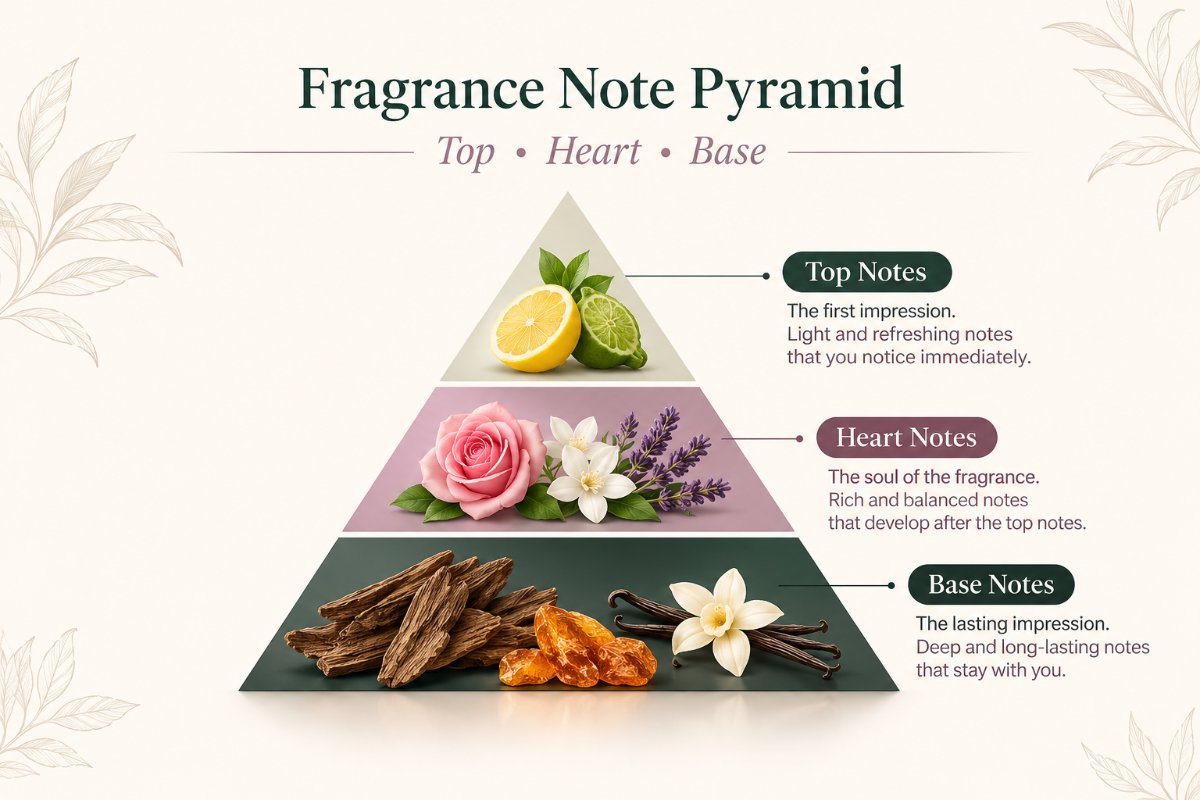
1. Read the Whole Note Pyramid, Not Just the Name
The product name is an indicator of what the brand wants to emphasise. Oud is identified through fragrance descriptions that mention its characteristic materials and notes.
Ingredients and descriptions that can help identify oud include:
Oud
Oudh
Agarwood
When looking for musk, check for descriptions such as:
Musk
White musk
Black musk
Floral musk
Clean musk
Remember that the name on the bottle does not always reveal every important note.
2. Look at Where the Note Appears
Identify whether oud or musk is used in the top, heart, or base notes.
The use of a particular note in the heart or across multiple stages of the fragrance may indicate its importance in the composition. Its use in the base might suggest a supporting role, but there is no strict rule.
It is an indication and does not show the quantity of the ingredient used.
3. Check How Often It Appears and in What Form
Look for recurring mentions of the same type of character in the fragrance.
For example:
The presence of oud in the heart note and agarwood in the base note can support a character dominated by oud.
The presence of floral musk in the heart note and black musk in the base note can support a character dominated by musk.
This can help you understand which fragrance profile the composition is designed to highlight.
4. Examine the Supporting Notes
Supporting notes will provide you with some understanding of what sort of oud or musk experience you can expect from a fragrance.
For instance:
Oud and amber, rose or saffron might bring warmer, richer or sweeter resinous notes.
Oud and sandalwood or lavender might create softer or more aromatic woody notes.
Musk and florals can create softer floral and musky notes.
Musk with amber and woods can produce warmer, deeper and richer notes.
It is not about individual notes alone, but about their overall composition.
5. Remember What a Note List Cannot Tell You
Note pyramids will never give you the precise concentration of all the individual ingredients or reveal which one prevails in the final fragrance. In addition, the order in which brands provide information about their notes can vary.
Take the note pyramid as a helpful pointer, and if possible, try the perfume on your skin. Let it blend in and observe how it evolves.
A woody and resinous character would indicate an oud-based profile, whereas a soft and smooth, skin-like character would indicate a musk-based profile.
Worked Example: Zenox Kashmiri Oud
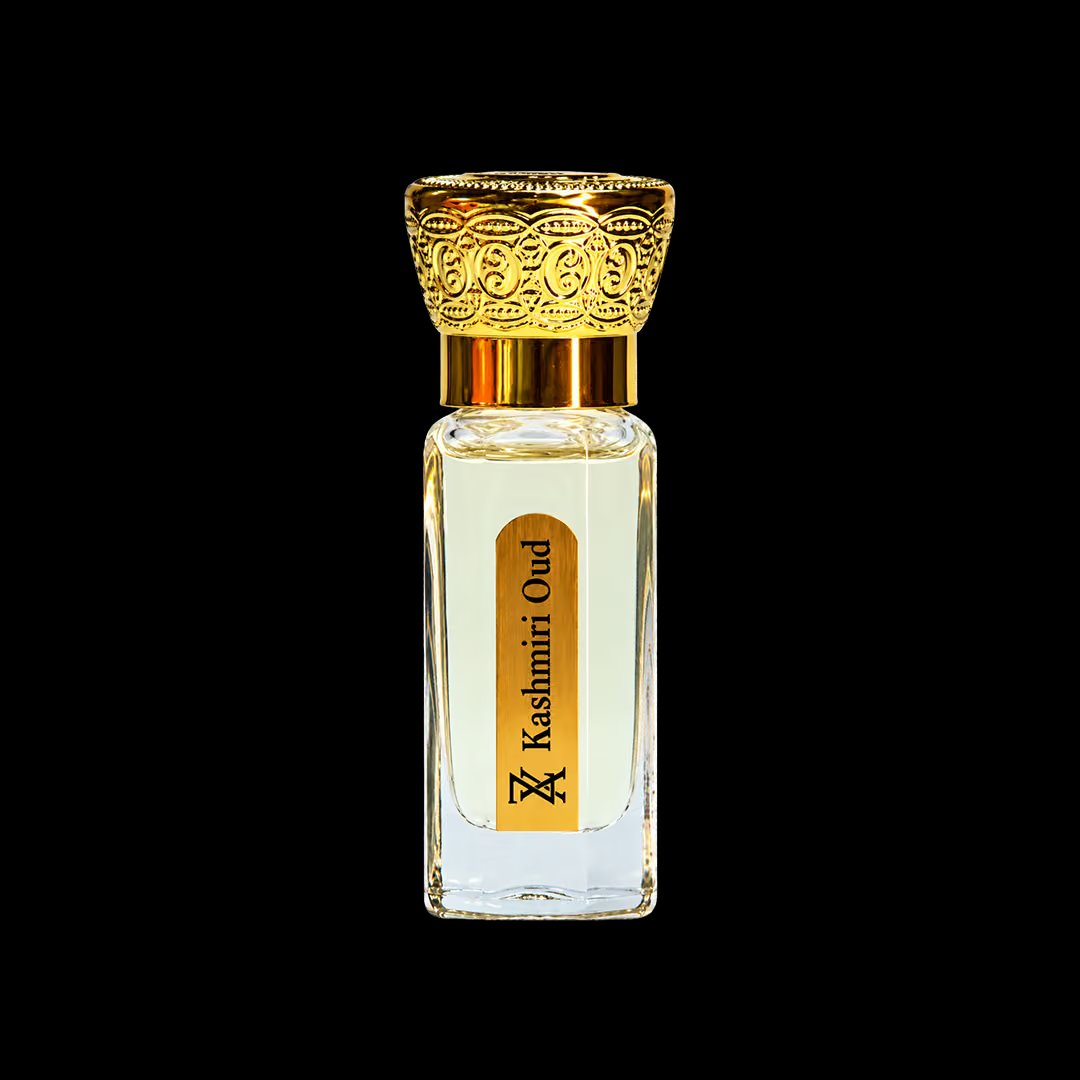
Top notes: Woody, fruity, fresh lavender
Heart notes: Oud, resinous woods, warm balsamic notes
Base notes: Agarwood, sandalwood, amber, musk
Oud can be found in the heart, whereas agarwood appears in the base. These notes help highlight the presence of oud in the composition. Sandalwood and amber add to the woody warmth of the perfume, whereas musk brings additional warmth to the scent.
Our interpretation: Oud-led.
Worked Example: Zenox Black Musk
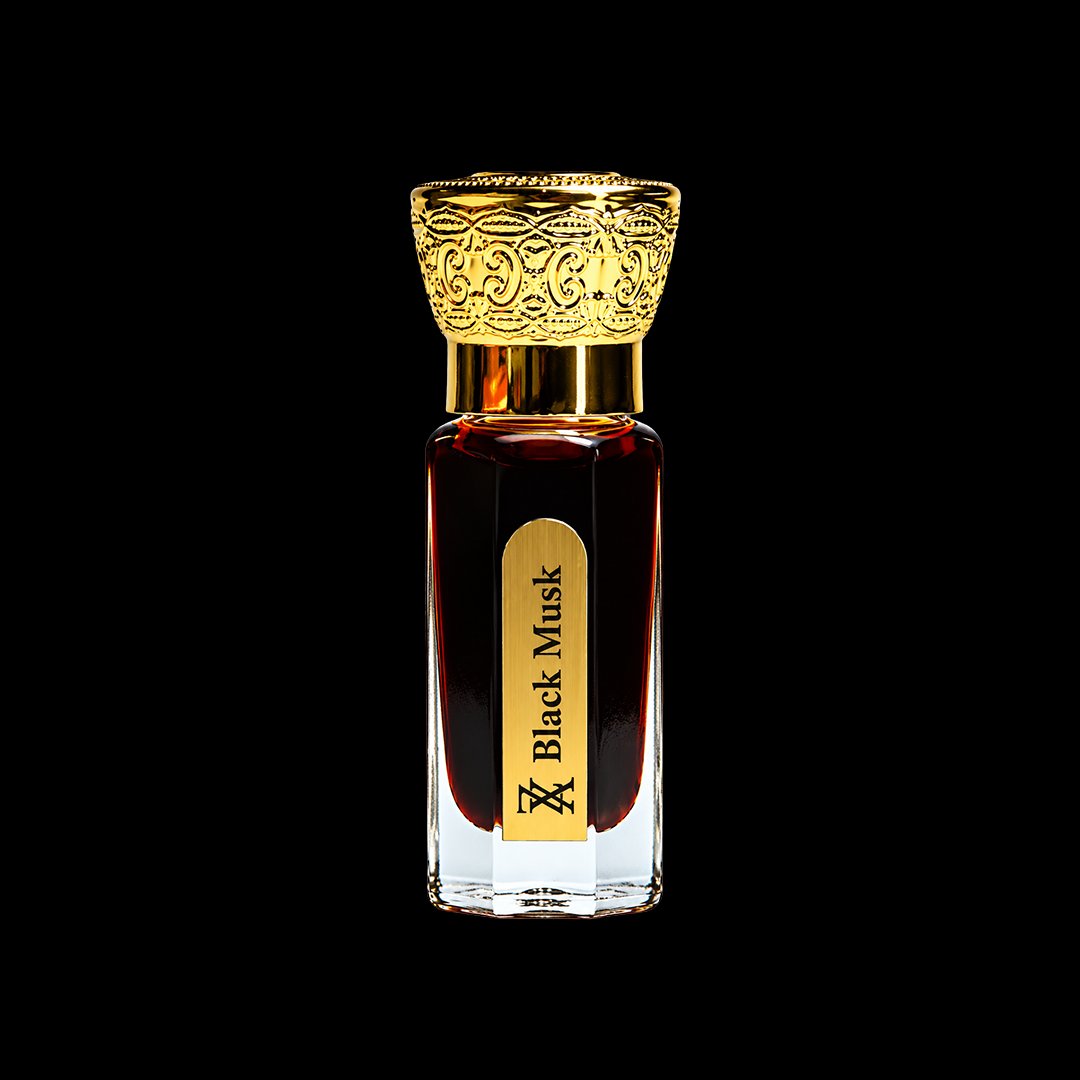
Top notes: Saffron, spicy accords, warm aromatics
Heart notes: Floral musk, rose, earthy accords
Base notes: Black musk, amber, woody notes
Musk appears in the heart as floral musk and in the base as black musk, making it an important part of the perfume's scent description. Rose, saffron and amber provide floral, spicy and warm notes, respectively, while the woody notes provide depth.
Our interpretation: Musk-led.
These cases illustrate how the whole note pyramid can assist you in determining the dominant character of a fragrance, even when both fragrances contain supporting notes from other families.
Common Mistakes When Reading Fragrance Notes
Some common mistakes should be avoided when contrasting oud perfume and musk perfume:
Trusting the name alone: An aromatic spray named "oud" or "musk" will have more than one note. You should always look at the full note pyramid.
Assuming every fragrance containing musk is musk-led: Oud is sometimes used as a supporting note but is not necessarily the main note.
Considering all perfumes having musk notes as being led by musk: Musk is used in many perfumes, and its inclusion does not mean the fragrance is dominated by it.
Looking only at top notes: Top notes offer the first impression, while the heart and base notes help you see what will happen next.
Using note position to determine concentration level: A note list is just a list and nothing more.
When to Choose an Oud-Led Fragrance
A fragrance featuring oud may be ideal in case you like woody, resinous and deeper fragrances.
Think about picking one when:
You need to have a unique woody note: An oud-based fragrance may suit well people liking aromatic, rich and complex scents.
You favor deeper scents: Try oud in combination with amber, sandalwood, saffron or some other warm scents.
You need a fragrance for an evening or special event: Deeper oud scents are commonly picked for weddings and celebrations, but it depends on the composition.
You traditionally like woody fragrances: Oud may be particularly interesting for those who like to discover deeper and resinous woody fragrances.
You need to try attars: Oud is a common fragrance note in many attar compositions.
Certain oud scents may be overpowering in nature, particularly the darker or smoky variants. As a beginner to oud, try a milder version that is blended with sandalwood, amber, or musk. Also, in summer season, try wearing less of this scent at first.
When to Choose a Musk-Led Fragrance
If you prefer clean, skin-like or warm fragrances, you can consider using a musk-led composition.
Choose one when:
You like comforting fragrances: Clean and powdery musk profiles can be appealing if you prefer softer fragrances.
You want a daily fragrance: Musks can sometimes be suitable for everyday use, although this depends on how strong they are.
You prefer fragrances for office settings: Softer musk compositions can be a good option if you prefer scents that are not too noticeable.
You love floral and warm fragrances: Musk blends well with floral and woody notes.
You prefer smoother fragrance profiles: Musk can add softness and warmth to fragrances without necessarily relying on woods and resins.
One important point to note: Not all musk fragrances are necessarily light. Deep musk fragrances with amber, spice and woods can be rich and noticeable.
When to Choose a Fragrance with Both Oud and Musk
Oud and musk do not have to compete with each other, as they can work together in the same perfume.
Whereas oud adds woody and resinous qualities to the perfume, musk can help make a composition smoother.
Zenox Kashmiri Oud is one of those perfumes built around a composition of oud, sandalwood, agarwood and amber, with musk included in the base.
The real question is often not simply "oud or musk?" but "how much woody depth and how much musky warmth do I prefer?"
If you love both profiles, find a fragrance that contains both of them, or try combining two different perfumes containing the individual profiles. Begin with just a little and see how they work together.
Quick Decision Guide: Oud-Led vs Musk-Led
Your preference or situation | What to explore |
|---|---|
You enjoy deep, woody and resinous aromas | Oud-led fragrance |
You prefer soft, smooth and skin-like aromas | Musk-led fragrance |
You want a rich fragrance for an evening or celebration | A suitable oud-led composition |
You want a softer fragrance for everyday wear | A suitable musk-led composition |
You enjoy warm, woody and comforting combinations | Oud and musk together |
You are exploring oud for the first time | A softer oud with sandalwood, amber or musk |
You want a richer musk profile | Musk with amber, spice or woody notes |
These are only guidelines; your individual preference, the entire composition of the perfume, the weather, and how much is applied will all affect how it wears.
If you also have to choose between different types of fragrances, see our guide to Attar vs Perfume.
Explore Oud and Musk Through Zenox: Kashmiri Oud vs Black Musk
Want to feel the difference yourself, then the Zenox Attar Collection has two fragrances, one oud-based and one musk-based. Both are alcohol free attars in 6ml bottles.
Kashmiri Oud Attar vs Black Musk Attar
Attribute | Kashmiri Oud Attar | Black Musk Attar |
|---|---|---|
Lead character | Oud | Musk |
Top notes | Woody, fruity, fresh lavender | Saffron, spicy accords, warm aromatics |
Heart notes | Oud, resinous woods, warm balsamic notes | Floral musk, rose, earthy accords |
Base notes | Agarwood, sandalwood, amber, musk | Black musk, amber, woody notes |
Overall impression | Deep, warm and woody | Warm and musky, with floral and spicy touches |
May suit | Those who enjoy rich, woody scent profiles | Those who prefer musky warmth with floral and spicy touches |
Neither of these perfumes is made up of only one scent note. The Kashmiri Oud has musk as its base note, while Black Musk has the note of amber as well as woody scents. They demonstrate how the two scent notes can co-exist in varied proportions.
In case you want to try both of these perfumes, it is suggested that you try them individually first to get an understanding of the unique scent they have. Then you can start experimenting with layering a little of one on the other.
Frequently Asked Questions
What is the difference between oud and musk?
Oud is generally characterised by woody, resinous and sometimes smoky notes, while musk is known for its soft, smooth and warm scent profile. Oud often adds depth to a fragrance, whereas musk can bring warmth and softness. However, their actual scent depends on the overall fragrance composition.
What does oud smell like?
Oud has woody and resinous aroma with smoky, sweet, balsamic, earthy or leathery undertones. The specific scent of this ingredient depends on the type of agarwood used as well as the other ingredients.
What does musk smell like?
Musk generally has a soft, warm and skin-like scent. It can smell clean, powdery, slightly sweet or deep, depending on the type of musk and the supporting fragrance notes. White musk is often associated with a clean and fresh character, while darker musk profiles can feel warmer and richer.
How can you tell if a perfume is oud-based or musk-based?
Check the full note pyramid of the fragrance. There should be mentions of oud, oudh, agarwood and different types of musks, including white musk, floral musk and black musk. Pay attention to how these notes are used in the fragrance. It will help you to understand its main features; however, the best way is to test the fragrance on your skin.
Can oud and musk be used together in a perfume?
Yes. Oud and musk are often combined in perfume compositions. Oud can contribute woody and resinous depth, while musk can add warmth and smoothness. Supporting notes such as amber, sandalwood and florals can further balance the combination.
Is oud stronger than musk?
Not necessarily. The strength of a fragrance depends on its overall composition, concentration and the materials used. Some oud fragrances have a deep and intense character, while certain musk fragrances can also be rich and noticeable. Therefore, neither oud nor musk is automatically stronger than the other.
If you're interested in exploring how different fragrance formats influence the way scents are experienced, you can also read our guide on Attar vs Perfume.